Sunday, July 29, 2012

Angolan Road Trip - Part 2


I headed to Lubango a day earlier than the rest of the group in a pick-up truck with a man that I had never met. Also a 5 –hour journey, the ride was stunning yet incredibly bumpy. Sleep was not an option this time.


We made it just in time for me to be the STAR of the conference at a university. That’s actually what it said in the program: Brigid Nee, US Embassy – STAR of the conference. No pressure. The great thing about that is the guy who organized the conference had never met me or seen me present. The simple fact that I am an American native speaker of English makes me a star. I try not to let that get to my head.

Hmmm...I thought she would be taller. 
The star has arrived!


The greatest game ever played: Scrabble
I was also in Lubango to participate in English Weekend, which is a 3-day event for all speakers of English in the province. It was organized by the English department at the university and was sponsored by the embassy.


Day 1 – Games and Karaoke


Day 2 – Film festival and Culture Night


Day 3 – English Picnic


Michael Jackson dance party on the bus 

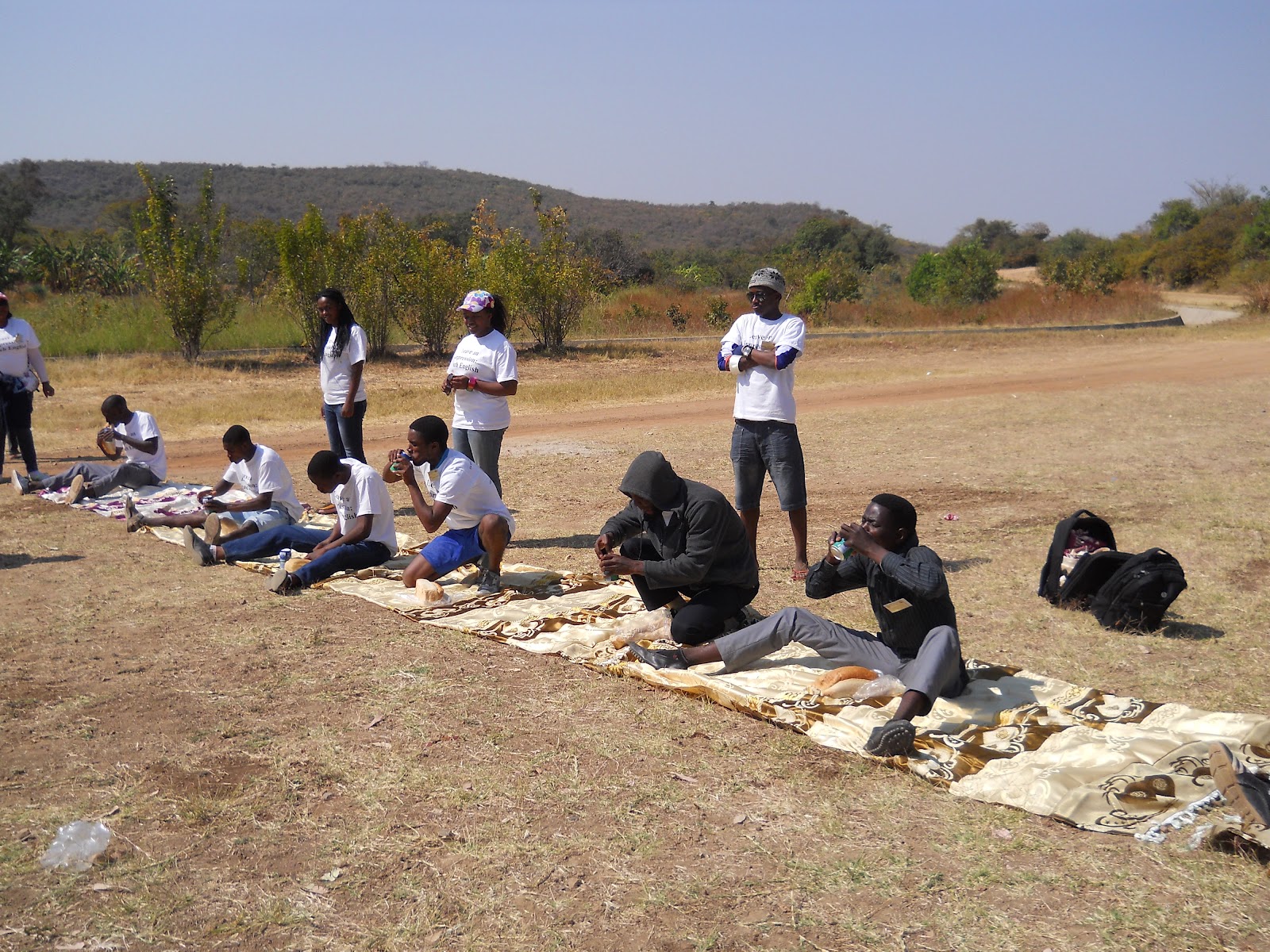
Nothing says English like an eating contest


Luckily, I had a free day for sightseeing. My host was kind enough to take me around to the most beautiful spots in Lubango. The Serra de Leba road is an iconic image in Angola. The road snakes around a mountain and leads to Namibe, the province just north of Namibia. An impressive, white statue of Jesus Christ overlooks the city from its highest peak.


Sunday, July 22, 2012

Angolan Road Trip - Part 1


open space!
Since I am still on my “pausa pedagogica” or semester break, I had the opportunity to join a delegation from the embassy on a trip outside of Luanda. Traveling out to the provinces is a challenge because of security restrictions. The embassy doesn’t allow its employees to fly on the non-FAA approved Angolan airline so all travel must be done by car. In addition, the embassy requires that at least 2 vehicles travel together when leaving Luanda province. The areas outside of the city are very remote so they lack the services that would be needed in an emergency.

Because of this, the various sections of the embassy coordinate travel to the provinces so that they accomplish multiple goals in one visit. That’s where I come in. The first stop on our trip was the city of Benguela, about 5 hours south of Luanda. Since we were traveling with the Ambassador, we had a police escort for the whole ride. Talk about feeling important! After exiting Luanda province, the landscape immediately transformed from a noisy, crowded mega-city to a peaceful, serene countryside. Round, thatch-roofed houses dotted the rolling hills and baobab trees stood prominently along the side of the road. I willed myself to stay awake so that I could enjoy the natural beauty that I had never before associated with Angola. Eventually, sleep took over my body and I began to doze, but my nap was interrupted by screams. The police car in front of us hit a monkey in the road. Maybe it was an evil monkey who was involved in a plot against the Ambassador.


The main purpose of my trip to Benguela was to lead a workshop for English teachers at a local university. In true Angolan style, I showed up at the school to find that no one there knew who I was or what I was doing there. I was told that my contact, who I had spoken to that morning, was not even in Benguela, but on holiday 2 hours away. I figured he had at least invited people to participate in this event so I asked the people in the English department where the presentation would be. Again, no idea what I was talking about. It was finally decided that 4 English teachers would join me in a classroom for the workshop. So I just spent 5 hours in a car to give a presentation to 4 people? That sounds about right.


Surrounded by Angolan men – story of my life. The guy on his phone showed up with 5 minutes left so he doesn’t really count.


One of the Ambassador’s events was a radio debate with politically active citizens in Benguela. To say it was a heated debate would be an understatement. It was fiery. Tensions are running high these days because of the upcoming elections, and a lot of people are angry. This forum allowed Angolans to express their frustrations, and they did – directly at the Ambassador. While misplaced, I certainly understand why they were so angry. At one point a man stood up in front of the crowd of 200 and asked, “Is there democracy in Angola?” to which everyone screamed “No!” The young man next to me was pleading, “We are not free! We are like slaves! America must do something!” “What exactly would you like us to do, sir?” was my response. Take over your government? Fight a war for you? We’ve seen how well that works out. I wanted to say, you need to do it - Angolans, not Americans. This is your country. Take responsibility for your future; don’t depend on us to save you.

Speaking of election fever….
I’ve learned that the dates on the academic calendar are rather fluid, but I was told that the 2nd semester would start “around the 1st week of August;” therefore, I made travel plans for most of July. I received a text on July 12th from a colleague at the university telling me that classes would begin on July 16th. Mind you, I am out in the provinces until July 20th. The reason for the early start is because classes will be closed again – for all schools in the country – for A MONTH due to the elections on August 31st. Why? There are a number of theories. 1) The government is doing this to make people happy before the elections because people don’t like going to work or school 2) The schools are sites for rallies and serve as polling stations 3) People need to be trained on how to count the votes 4) People need to be available to participate in “campaign” activities like going to parties where the candidates pass out free beer.
While it’s been nice to have a break from classes so that I can travel and focus on other projects, I am eager to continue working with the university students. I know they are too. In fact, a male student called me last week and said “Hello professor. I am not calling about class. I am calling to tell you that I miss you.” Inappropriate. 

Tuesday, July 3, 2012

Proud to be an American


As the American community here in Luanda prepares for our Independence Day celebrations, I am reminded that I am extremely lucky to have been born in a country that values freedom and democracy. These words are thrown around alot, but I don't think you can ever really appreciate what they mean utnil you experience what life is like without them.
In Angola, the government does not want the people to undermine the absolute authority that it currentlly enjoys. It doesn't want its people to be educated or informed aboout the world around them. President Dos Santos wants to continue his 32-year reign without opposition from the citizens or other political parties.  A presidential election will be held here on August 31st and it will most likely not be free and fair. As that day approaches, there has been a significant surge in political activity. It is easy to see why the people are dissatisfied. They are surrounded by wealth, yet live in extreme poverty. The President and his cronies live in lavish palaces while the rest of the country is surrounded by filfth and disease.
The most recent protest took place on June 20th. I was sitting at my desk at the university when I heard a commotion outside. I went over to the window and saw a stream of people walking down the street and chanting.  My colleague informed me that they were former soldiers from the civil war who had not received the pensions that were promised to them.  As we wacthed more and more people flood the streets, I became increasingly nervous .  I was scheduled to go to the embassy that afternoon but was told that would be impossible since the building was on lockdown. The protestors were moving in that direction.
I sat in my office, not knowing what to do and tryng not to panic. Was it safer to stay put or go home? A few hours passed and I was told that it was OK to leave. The drive home was eerily quiet and the streets were uncharacteristically empty. I made it home safely to find that the Internet was down, which is a pretty common occurrence so I didn't think much of it, until I found out the next day that it wasn't working throughout the entire city. Coincidence? By the way, the President's daughter owns the internet company.
Independent journalists were not allowed anywhere near the protests and those suspected of reporting the event had their cameras and cell phones taken away. Some say that 1 person died, while others say 2. Of course, all this information is hearsay due to the lack of freedom of the press. What we do know is that the government quickly shut down the protest with gunfire and teargas.

While Americans flock to beaches and BBQ's tomorrow, let's not forget that most of the world does not enjoy the simple freedoms that we have come to expect and that we so often take for granted.


This amateur video was posted on YouTube. As you can see, the police took swift action in dispersing the protesters.

I did manage to find one article about the event: Gunfire Used to Disperse Former Soldiers' Protest

Monday, July 2, 2012

Polio Vaccination Campaign

I see people every day on the streets of Luanda who have been affected by polio. Some have been so severely paralyzed that they crawl on their hands and knees while begging for spare change. This is a particularly frustrating sight to see since this disease can easily be prevented through regular vaccinations during childhood.  

What is Polio?


Poliomyletis is a virus that is transmitted from person to person primarily through the oral-fecal route, by ingesting contaminated food or water. Spinal polio, the most common form, can cause muscle weakness and paralysis, usually affecting the legs. Polio epidemics have crippled thousands of people, mostly young children; the disease has caused paralysis and death for much of human history. There is no cure for the disease and it can only be prevented through vaccination. The vaccine was developed in the 1950's and has reduced the global number of polio cases per year from many hundreds of thousands to today under a thousand.

Polio in Angola

Factors that increase the risk of polio infection or affect the severity of the disease include poor sanitation , malnutrition, and immune deficiency. Walking around the neighborhoods in Luanda, where rivers of open sewage flow through the streets and past the homes of children, it is easy to see why people continue to be affected by this disease.

Angola experienced a polio outbreak in 2007 and again in 2010, which spread to neighboring Democratic Republic of Congo. According to the World Health Organization, outbreak response in both countries has been inadequate to stop transmission of the viruses. Monitoring indicated that as many as 25% of children are missed during vaccination campaigns in Luanda Province.


Africare Angola Polio Vaccination Campaign


The Ministry of Health has partnered with USAID and various non-governmental organizations, like Africare, to organize vaccination campaigns. They rely on volunteers to go out into communities and find children 0-5 to administer the oral drops. The most recent campaign took place from June 29 to July 1. More than 1,000 children were vaccinated.
Yesterday, my team went out to Palanca, a neighborhood outside of Luanda. We walked the streets looking for children and knocking on doors. Parents welcomed us into their homes or brought their children outside so that we could administer the oral vaccine. Some opened their mouths enthusiastically while others screamed in terror at the sight of us. After we gave them the 2 drops, we painted their left pinky to let other volunteers know that they had been vaccinated.

One of the most shocking things about this process is the lack of formality involved. There were no health records or signatures. We often didn't even ask for permission from the parents. If I saw an 8-year-old carrying a baby down the street, I would just check his finger nails and then go for it. Can you imagine a group of foreigners walking through your neighborhood, dropping a mysterious liguid into your children's mouths? I don't think that would fly. 

It was an amazing experience and I feel encouraged by the work done by Africare Angola and the other volunteers. We have to believe that every little bit helps. 

     
Palanca


Vaccination Team


Friday, June 29, 2012

My Triumphant Return to Cape Town

African Air Travel

best travel buds
Cape Town is my favorite city in the whole world, so when I found out that I would be going back to Africa, I knew that a trip to South Africa was a must. The perfect opportunity came about when my good friend and travel partner, Jenny, went there for a conference in May. I hopped on a plane and shot down there to meet her for a long weekend. Actually, it wasn't quite that simple....We are in Africa, after all. 
I booked a flight online with Air Namibia with one stop in Windhoek, the capital of Nambia. However, when I arrived at the Luanda airport (aka the worst place in the world), I was told to check in with TAAG. TAAG is the Angolan airline that is not FAA approved, so is generally avoided. For whatever reason, I was about to fly on a TAAG plane for the first leg of the trip. Fine, so I go up to the counter and give the agent my passport and confirmation number. This conversation followed:

Agent: Did you confirm?
Me: I don't know. What do you mean?
Agent: (typing furiously) No, you didn't confirm. You're not on the flight list. 
Me: I don't understand.
Agent: You need to call the airline 72 hours before your flight and confirm.
Me: Well, I paid for the ticket. Isn't that confirmation?
Agent: I have your ticket here but you are not on this flight. 
Me: Ok, so you have my ticket but I can't go on the flght because I didn't call you and let you know that I was coming. Is that correct?
Agent: Yes, ma'am. 
Me: I have never heard of this in my life. 
Agent: We can put you on standby but the flight is full. Please stand over there and I will call you if a seat becomes available. 
Me: Ummmm OK. Are there any other flights to Cape Town? 
Agent. No. 
Me: Perfect. 

The agent relayed this information so matter-of-factly that I started doutbting myself. "Is this a thing? No. This is crazy, right? RSPV for a flight?" Finally, just as the flight was about to board, the agent waved me over and gave me my ticket, which he had all along. 
Now comes the really fun part. After going through security, men and women are separated and lined up in front of a small office to be questioned and strip searched. Luckily, I had been warned of this process. Apparently, if you have any kwanza, which is Angola's currency, it is taken from you, especially if you don't speak Portuguese. I'm not sure if this is an official policy, but to be on the safe side, I didn't bring any with me. The security agent in the office asked me how much money I had and then searched me. After finding nothing, she disappointedly waved me through. Sucker!
I settle into my seat around 7am and quickly fall asleep. That was a lot of activity for one morning! I awake a few hours later as the plane lands. Assuming we are in Windhoek for my layover, I gather my belongings and get ready to disembark. "You can leave your stuff on the plane," the flight attendant says. I look at her quizzically as I notice that none of the passengers are getting their suitcases from the overhead compartments.  The flight attendant recognizes my confusion and remarks, "We are in Lubango." Lubango is another city in Angola! How silly of me to think that we would only be making scheduled stops. 

After one of the most confusing days of my life, I eventually made it to Cape Town. I walked out of the airport and inhaled the crisp, clean air. Ahhhhh....this trip would literally be a breath of fresh air.


Table Mountain


We ate delicious, reasonably priced food, spoke English to everyone, and walked all around the city without getting mugged. Freedom! We even sang along to "Sweet Caroline" at a cheesy sports bar. Cape Town is pretty much America - with cooler accents and slightly more black people.


The Waterfront


Shark Attack!


Anyone who knows me can tell you that animals are not exactly my thing. How Jenny convinced me to go diving with great white sharks, I'll never know. I am assuming there was alcohol involved. Although it appears that I am excited to enter a cage surrounded by man-eating predators, this is actually the face of sheer terror. 


The first time I went underwater, I stared directly into the eye of a great white shark, which was about 1 foot away from me. I completely forgot how to hold my breath, swallowed a mouthful of seawater, and immediately popped my head to the surface and yelled, "Can I get out now?" Money well spent.


Look at that thing, clearly plotting my demise. Good thing thing I got out of there in time.

Monday, June 18, 2012

1 Down, 1 to Go

Well, I survived one semester and all in all I feel pretty good about it. This has been, by far, the most challenging teaching environment that I have been thrown into. No curriculum, no materials, 30-40 students per class (I am used to 15 max). And, in case you were wondering, I never did receive an attendance list. Still wingin’ it on that one.  
One of my major obstacles at the start of the semester was the incessant tardiness of the students. I can’t say I have completely solved the problem, but it has definitely improved and I have gained quite the reputation around school for being “very strict and very punctual.” I’m OK with that. Occasionally, a student will attempt to stroll into class an hour late, which causes me to promptly give a long-winded lecture about the importance of punctuality – not only for them as individuals, but for society as a whole.  Apparently sometimes I think that my job here is to change the mindset of an entire country. That is why they pay me the big bucks, after all.
During the last week of the semester, I asked my students to provide some feedback about the course. They were asked to write down what they liked, didn’t like, and give a suggestion for next semester. This was the best idea I’ve ever had. Sure, this will provide valuable insight on my performance and help me to develop professionally, but more importantly, their responses made me laugh out loud…and that’s really what it’s all about. Here are some of my favorites:
·         Truly speaking you are intelligent.
·         You are always on time. Keep it. My congratulations.
·         I don’t find a pessimistic angle on this course because it is my favorite.
·         I didn’t like the schedule, 4 times the same subject, although teacher motivated us, sometimes it was annoying. God bless you and your family!
·         I learned to come on time.
·         She could make us use our 6 senses because her lessons were very good.
·         I could realize that beside being beautiful she is also a very good professor.
·         I would like to say to God protect you today and forever.
·         You are the one.
·         I would like to have for next semester tough exercises and not babies exercises.
·         The system you use is good. The American system.
·         I’d like to study with a tape and songs of the most American singers like Lionel Richie, Michael Jackson, etc.
·         What I just found out on you is that you are just too liberal. Sometimes my classmates make such kind of horrible noises when they are making conversation.
·         I have learned many things about your lesson but I wanna receive more about you…
 

Thursday, June 14, 2012

Kaposoka

I had the pleasure of attending a performace by the Kaposoka Children's Orchestra last week. They were incredible! The kids attend a music school funded by the government and recently competed in an international competition in Argentina.


Can you imagine how many little geniuses there are in this world who never get the chance to showcase their talents?